![Selling A House with Foundation Problems [market_city]](https://image-cdn.carrot.com/eyJidWNrZXQiOiJwcm9kdWN0aW9uLmNhcnJvdC11cGxvYWRzLm9uY2Fycm90LmNvbSIsImtleSI6InVwbG9hZHMvc2l0ZXMvMjUyMzEvMjAyNi8wNi9TZWxsaW5nLUEtSG91c2Utd2l0aC1Gb3VuZGF0aW9uLVByb2JsZW1zLnBuZyIsImVkaXRzIjp7InJlc2l6ZSI6eyJ3aWR0aCI6MTE1Mn0sInRvRm9ybWF0Ijoid2VicCIsIndlYnAiOnsicXVhbGl0eSI6NzB9fX0=)

Foundation problems don’t have to kill your home sale. Last year, I bought a house in Spokane where the basement cracks looked so bad the seller assumed she’d have to practically give the place away. A structural engineer took one look and told us most of it was cosmetic settling, normal stuff for a house that age on that soil. She walked away with a fair price and never swung a hammer.
I’ve bought hundreds of homes across Washington. Foundation issues scare people because they sound expensive and catastrophic. Sometimes they are. But more often, sellers panic over problems that are either manageable, priceable, or simply transferable to the right buyer.
What’s Actually Causing the Damage
Washington’s geography does a number on foundations in ways that wouldn’t apply in, say, Arizona or Georgia.
The Puget Sound region sits on glacial deposit material that shifts and compresses differently than solid bedrock. West Seattle, chunks of Tacoma, parts of the Eastside: a lot of these neighborhoods were built on fill dirt that was never going to stay perfectly still. Even newer construction in Bellevue and Redmond hits trouble when builders run into unexpected soil conditions mid-project and cut corners to stay on schedule.
Water is the real culprit in most cases. Our wet winters push moisture deep into the soil around your foundation. Then dry summers hit and clay soils shrink back, leaving voids. Homes in Queen Anne, Capitol Hill, and similar neighborhoods sit on slopes where drainage was never designed to handle the kind of rain we get, and that water goes somewhere, usually straight toward your foundation wall.
Seismic activity plays a role too, though not through dramatic single events. It’s the accumulation of minor movement over years that slowly widens a crack or causes differential settling, where one corner of the house drops faster than the rest.
Trees are underrated villains. That massive maple in your backyard might have roots running 25 feet under your slab. In older Seattle, Olympia, and Spokane neighborhoods, mature evergreens and hardwoods constantly pull moisture from the soil, which shifts and shrinks around your foundation. Remove the tree incorrectly, and the soil can rehydrate and heave.
Then there are the construction shortcuts of Washington’s 1980s and ’90s building boom. Suburbs like Federal Way, Kent, and Everett grew fast. Some of it was built right. Some of it wasn’t. Those houses went up on shallow footings, with poor soil compaction and drainage that was adequate for the day but not for how the neighborhood eventually developed.
How to Read What You’re Looking At
Not every crack is a crisis. Here’s how to sort the warning signs from the noise.
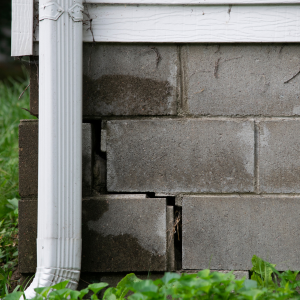
Walk the interior first. Doors that stick or won’t latch when they used to are a flag. Windows that bind or have developed noticeable gaps around the frame tell the same story. Look for diagonal cracks running from the corners of the door and window openings; those usually indicate movement, not just settling. Stair-step cracks in brick or block walls are also worth noting.
If you’re selling a house with water in the crawl space, get a flashlight and inspect the area carefully.
You’re looking for cracks wider than a quarter-inch, any crack that has water staining or moisture around it, and most importantly, horizontal cracks. Vertical cracks often indicate settling. Horizontal cracks suggest the wall is bowing inward under soil pressure, which is a structural concern, not a cosmetic one.
Outside, walk the perimeter. Look for sections where the foundation appears to be separating from the house above it, crumbling mortar, or ground that slopes toward the foundation instead of away from it. Settled or sunken landscaping near the foundation is often a sign that water has been pooling there for years.
Inside, roll a marble across your floors. A noticeable slope, springy spots, or flooring that’s pulling away from the baseboard at one end. All of these point to movement below.
When I worked with the Vargas family in Puyallup, they were convinced they needed a full foundation replacement. One structural engineer visit later, we found the core issue was a drainage problem fixable for about 15% of what a contractor had quoted for foundation work. They’d been scared into a number that didn’t reflect their actual situation.
Document everything you see. Photos, measurements, dates. It protects you during disclosure and gives buyers something concrete to work from instead of just their fear.
What Washington Law Requires You to Disclose

Washington gives buyers up to six years to sue a seller who concealed known defects. That’s longer than most states, and courts here have not been sympathetic to sellers who claimed ignorance when the evidence suggests otherwise.
You’re required to complete a Seller Disclosure Statement for most residential sales. It asks directly about structural problems, water intrusion, and known defects. Listing your home as-is doesn’t get you out of this. “As-is” means you won’t make repairs; it doesn’t mean you can stay quiet about problems you know exist.
The legal standard matters here. You don’t have to hire an engineer to go looking for problems you don’t know about. But once a contractor mentions foundation movement, once you notice the cracks yourself, or once your agent flags something during a walkthrough, that knowledge triggers your disclosure obligation.
Material defects include anything affecting habitability, safety, or value. Minor surface cracks may not qualify. But water intrusion, active settlement, or anything that would cost more than a few hundred dollars to address almost certainly does.
Your agent has obligations too. If they’re aware of foundation issues and don’t ensure proper disclosure, they face professional discipline and liability. Good agents push toward transparency not because they’re overly cautious but because they’ve seen what happens when sellers try to hide things that inspectors find anyway.
Honest disclosure, backed by documentation and professional estimates, tends to create smoother transactions than vague answers that leave buyers filling in the gaps with their worst assumptions. This is especially important when working with Washington investor home buyers, as transparency helps build trust, minimize surprises, and keep the selling process moving forward efficiently.
Your Actual Selling Options
Yes, you can sell a house with foundation problems in Washington. It happens constantly.
The challenge isn’t the problem itself; it’s finding the buyer who fits it. Conventional financing is where things get complicated. FHA and VA loans have structural requirements, and lenders typically won’t approve a loan on a home with unresolved foundation issues. That cuts into your buyer pool significantly.
Cash buyers and investors are your primary market. They price in repair costs, move faster, and don’t need a lender’s sign-off to proceed. In King County, Snohomish County, and other competitive areas, investor buyers actively seek distressed properties, foundation issues included because most buyers won’t touch them. That is the market we work in every week. Whether you are looking at cash home buyers in Tacoma or we buy houses in Everett, a buyer who prices the repair is easier to find than a lender who will overlook it.
House flippers and contractor-investors can get foundation work done at or near cost. What a homeowner pays $20,000 for, a contractor with his own crew might handle for $10,000 or less. That math affects how they price their offers, but it also means they’re not walking away from a deal just because the foundation needs work.
Owner-occupants aren’t entirely out of the picture either. Some buyers want a specific school district, a particular lot, or a house with character that’s hard to find. If your foundation-problem home has features that buyers want, you’ll still get interest. Renovation loans like the FHA 203(k) can wrap foundation repairs into the mortgage for buyers willing to navigate that process.
Market conditions shape everything. In a seller’s market, buyers compete even for houses with disclosed problems. In a balanced or buyer’s market, you’ll negotiate harder and longer.
On value: Unrepaired foundation issues can significantly impact a home’s market value, often reducing it by 10–15%. For a $400,000 home, that translates to a potential loss of $40,000–$60,000. In many cases, buyers discount the price by more than the estimated repair cost because they factor in the inconvenience of managing repairs, potential permit delays, and the possibility of uncovering additional structural problems once work begins. If you’re looking to sell your house fast in Seattle, addressing foundation concerns or working with a buyer experienced in purchasing homes with foundation issues can help you avoid steep price reductions and streamline the selling process.
Fix It or Sell It As-Is

The math here is more nuanced than it looks on paper.
Repairs under $5,000 almost always make sense before listing. Minor crack injection, basic drainage fixes, and simple grading corrections cost less than the value they recover and reduce the friction during negotiations.
Major work is a different calculation. Foundation stabilization with steel or helical piers runs $10,000–$30,000 for average homes, sometimes significantly more. Bowing wall repair with carbon fiber strips or anchors: $8,000–$15,000. Full wall replacement: costly enough that you’d need to verify your specific home and neighborhood could support that investment.
Then add permits ($1,650 on average plus inspections), a structural engineering report ($800–$2,000), and contractor availability. Foundation work is seasonal; contractors are booked through dry months. You could be looking at a four-to-six-month timeline before you list.
If you’re selling because of a job move, an estate, or financial pressure, that timeline alone may answer the question. Some foundation problems also get worse while you wait; active water intrusion doesn’t pause while you schedule bids.
The repair-to-value ratio matters by neighborhood. A $25,000 foundation repair on a $1.2 million home in Mercer Island is a different conversation than the same repair on a $280,000 home in a slower market. Run the numbers for your actual situation, not the general principle.
What “As-Is” Actually Looks Like
Jennifer inherited a house near Gonzaga with a foundation that three contractors said needed $20,000 in work. She listed it honestly, disclosed the engineering assessment she’d gotten, priced it to reflect the condition, and had four offers from investors within two weeks. Closed in 18 days.
As-is sales work when sellers do them right. That means full disclosure, realistic pricing, and targeting buyers who expect to do work. It doesn’t mean hiding the problem and hoping inspectors miss it; they won’t.
Cash buyers typically close in two to three weeks once they’ve done their own due diligence. There’s no lender appraisal, no repair contingency period, no back-and-forth over credits for issues the inspection found. You accept that the offer will be below retail, and you get certainty and speed in return.
For sellers facing foreclosure deadlines, probate timelines, or financial strain, the speed and certainty of a cash sale can be worth the trade-off. When time is limited, working with a company that buys houses for cash can provide a practical solution. Marcus Brooks was three months behind on his mortgage and facing an auction date when he called us. Within days, he received a cash offer that covered his mortgage payoff and moving expenses, allowing him to avoid foreclosure and move forward with confidence. If you need to sell quickly, Sell My House buys houses for cash. Call us today.
Frequently Asked Questions
Is it hard to sell a home with foundation issues?
More challenging, not impossible. Your buyer pool shrinks; most financed buyers can’t purchase until repairs are done. But cash buyers and investors are active in Washington’s market and regularly purchase homes with disclosed foundation problems.
How much does a foundation problem reduce home value?
Unrepaired issues typically reduce value by 10–15%. Severe structural damage can push that to 20–30%. Buyers also tend to discount more than the actual repair cost to account for risk and inconvenience.
Should I repair or sell as-is?
For repairs under $5,000, fix it. For major work, run your specific numbers: timeline, repair cost, your home’s value, and your market. Many sellers in time-sensitive situations come out ahead by selling as-is to the right buyer rather than financing expensive repairs on a property they’re trying to exit.
What do buyers look for when making foundation-problem offers?
Engineering assessments, repair estimates from licensed contractors, permit history, and your disclosure statement. The more documentation you provide, the less buyers have to assume, and their assumptions are almost always worse than reality.
If you’re sitting in a Washington home with foundation issues and are not sure which direction makes sense, the first step is getting a structural engineer’s assessment, not a contractor’s bid. Engineers diagnose; contractors sell solutions. Know what you’re actually dealing with before you decide whether to fix it, price it, or walk away from it entirely.
Helpful Washington Blog Articles
- Can I Sell My Parents’ House with Power of Attorney in Washington
- Selling an Estate Home in Washington
- How to Sell a House in Forbearance in Washington
- Can Sell a House As-Is Without Inspection
- Can I Short Sell My House to a Relative or Family Member?
- Can You Sell a House with a Mortgage in Washington
- Can You Sell a House With a Lien in Washington?
- How to Sell an Inherited Property in Washington
- How To Sell A Fire-Damaged House In Washington
- Selling A House with Foundation Problems in Washington
- How to Sell A House Without A Realtor in Washington
- How Long Does It Take to Sell A House in Washington
- Can My Spouse Sell Our House Without My Consent in Washington
- Selling A House With Water In The Crawl Space In Washington
- How To Sell Your House On Facebook Marketplace
- How Much Does Home Staging Cost In Washington State
- Washington Earnest Money Rules