
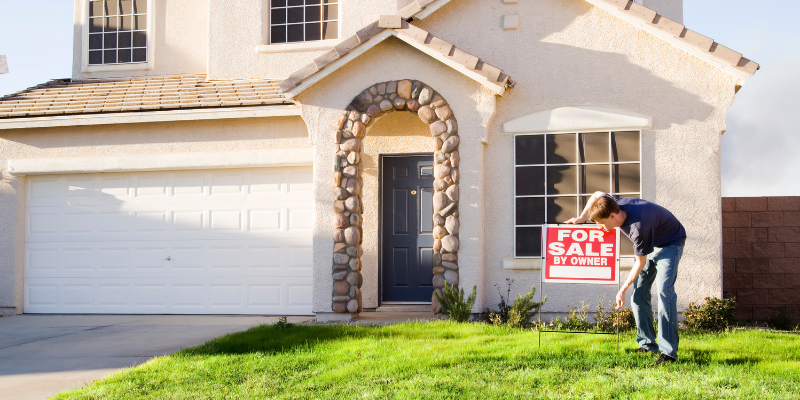
Let me be straight with you: I’ve seen this go both ways. Sellers who pocketed tens of thousands by going it alone. And sellers who bled carrying costs for six months before finally calling an agent, ending up worse off than if they’d just hired someone on day one.
Before you try to sell a house without a realtor in Washington, understand one thing. This market doesn’t forgive mistakes the way slower markets do.
Should You Even Try FSBO?
Only about 5% of home sales went FSBO last year. That number tells a story. It’s not that people don’t want to save on commissions — everybody does. It’s that most people get into the process and realize pretty fast they’re in over their heads.
The state’s median listing price sits around $648,500, and homes go pending in roughly 8 days in competitive areas. That’s not a lot of runway to figure things out as you go.
FSBO isn’t crazy if your situation fits. You’ve got time, you’re not under financial pressure, you’ve dealt with contracts before, or you’re in a low-inventory pocket like Issaquah or Redmond, where buyers are practically lining up. In those cases, go for it.
But if the market’s soft where you are, you’ve never read a purchase agreement in your life, or you’ve got a job and kids and a life — this process will eat you alive. I’ve watched it happen in Spokane and Tacoma more times than I can count, and plenty of those sellers ended up calling cash home buyers in Tacoma just to get the house off their hands. Sellers struggle for months, eventually hire an agent anyway, and lose money on carrying costs in the meantime.
The three things that trip people up most are pricing a home incorrectly, underestimating how long it takes to sell a house, and drowning in paperwork. Washington’s disclosure requirements alone have derailed plenty of otherwise capable sellers. If that is not a risk you want to carry, it is worth seeing how we buy houses for cash before you commit to a listing.
The Real Pros and Cons
Here’s the dream: a seller I know in Kirkland moved her townhouse for $580,000 in three weeks. Her neighbor’s nearly identical unit netted $15,000 less after paying an agent. That kind of outcome does happen.
But here’s what the dream leaves out.
About 75% of FSBO sellers still end up paying the buyer’s agent commission — usually around 2.5%. So right away, you’re not saving as much as you thought. And FSBO homes historically sell for around 18% less than agent-listed properties. On a $600,000 home, that gap adds up fast. Even after commissions, the math can work against you.
The flexibility is real, though. No agent pressuring you to drop the price. No mandatory open houses on your only free weekend. You control timing, terms, everything. For some people, that’s worth a lot.
The part nobody warns you about? Showings. One seller I know in Federal Way said she felt like she couldn’t leave her own house — buyers expect you to respond within the hour. And buyer’s agents know how to play the inspection phase. They’ll push for repair credits on things that don’t actually need fixing, and if you don’t know which requests are legitimate and which are just pressure tactics, you’ll fold.
The Challenges Nobody Mentions Upfront
Buyer’s agents are good at their jobs. Really good. They deal with FSBO sellers regularly and often assume there’s room to push harder because you don’t have professional backup.
Pricing isn’t a one-time decision either. The market in Seattle shifts week to week. Price is too high and sits for three weeks, and you’ve already lost momentum — price drops signal weakness to buyers. Professional agents adjust constantly based on feedback and fresh comps. Most FSBO sellers hang onto their number way too long.
The paperwork in Washington is genuinely complicated. You need at least 14 documents: purchase agreements, disclosure statements, and addenda. The Seller Disclosure Statement, known in Washington as Form 17, alone covers structural issues, environmental hazards, noise, and easements. Miss something or get the timing wrong, and you’re handing the buyer grounds to back out or renegotiate at the worst possible moment.
Plenty of unrepresented sellers trip over a disclosure or a contract deadline, and you tend to find out at the worst possible moment.
What It Actually Costs
Most people go in thinking they’re saving a full commission and come out realizing the math was messier than expected. Here’s roughly what you’re looking at:
- Professional photography and virtual tour: $500–$1,200
- Flat-fee MLS listing: $300–$800
- Legal document prep: $500–$1,500
- Pre-listing home inspection: $400–$600
- Marketing materials: $200 on the low end, up to $3,000 if you want staging consults and floor plans
Then there’s your time. A successful FSBO sale runs 30–50 hours of real work over several months. If your time is worth anything — and it is — factor that in honestly.
And again: most FSBO sellers still pay the buyer’s agent. On a $600,000 home, that’s $15,000–$18,000 right back out the door.
Every extra month the house sits also costs you — mortgage, insurance, utilities. Washington homes average about 31 days on the market. FSBO properties tend to run longer.
The Paperwork Problem
One Everett seller almost lost her sale two days before closing because she was missing septic documentation. Her buyer’s attorney caught it. Agents deal with this kind of thing routinely — it’s muscle memory for them. For her, it was a near-disaster.
Beyond the standard disclosure forms, your property might need well water testing records, HOA financial statements, or specific environmental certifications, depending on location. And the timelines matter legally — Washington sets deadlines for certain disclosures, and missing them hands buyers an exit ramp right when you least want one.
Most savvy FSBO sellers spend $1,000–$2,000 on a transaction coordinator or real estate attorney just to handle the paperwork and compliance side of the sale. It’s not the most exciting expense, but it’s often the difference between a smooth closing and a deal that falls apart due to missed documents, deadlines, or legal issues. If you’re trying to sell your house fast in Seattle, having the transaction side handled properly can help avoid costly delays and keep your sale on track from contract to closing.
Do You Need an Attorney?

Washington doesn’t require one. But “doesn’t require” and “doesn’t need” are very different things.
For most standard sales, a transaction coordinator ($500–$1,200) covers the document and deadline management without attorney hourly rates. Attorneys in Washington run $200–$500/hour, and a full transaction review can hit $1,000–$3,000.
Where attorneys genuinely earn their fee: title disputes, estate sales, divorce situations, properties with environmental issues, or complicated ownership.
If your sale is anything other than clean and straightforward, legal help isn’t optional — it’s just smart.
For everything else, a solid transaction coordinator paired with your own thorough research usually covers the gap.
Your Real Alternatives
Going it completely alone or hiring a full-service agent at 5–6% aren’t your only two options.
Discount brokers charge 1–2% and still handle MLS listing, photography, and basic support. Flat-fee MLS services run $300–$800 — you get the listing, you handle everything else. Limited service agreements let you hire an agent for specific pieces (pricing analysis, contract review) without the full cost of representation.
Cash buyers are worth considering if your property needs work or you’re on a deadline. The offer will be lower, but you skip repairs, showings, and the drawn-out process entirely. One seller needed to move his mother’s house while living three hours away. After two months of failed FSBO weekends and carrying costs stacking up, he took a cash offer and closed in two weeks — netting more in the end than he would have otherwise.
Property condition plays a major role in determining the best-selling option. Well-maintained, updated homes are often a good fit for discount real estate services. However, properties that require extensive repairs or renovations may be better suited for cash home buyers, including companies that buy houses in Washington, since they typically purchase homes as-is without requiring repairs or improvements before closing. The same holds in the north end, where sellers often weigh a listing against we buy houses in Everett offers before deciding.
Finding a Good Agent at a Lower Rate
Rates are more negotiable than most agents let on. In seller’s markets, especially, agents compete for listings. Higher-priced homes also give you more room to negotiate on the percentage.
Interview several. Ask directly about reduced rates for quick closings or if you’re willing to handle some tasks yourself. Technology-enabled brokerages have lower overhead and often pass that along in their pricing. Some agents building their reputation in a new area will discount to grow their volume.
Just vet them properly. Discount doesn’t always mean bad, but some cut corners in ways that cost you at the negotiating table. Check references and look at their actual recent sales, not just their pitch deck.
FSBO vs. Discount Agent: The Honest Answer

This comes down to three things: your time, your experience, and your property.
If you’ve bought and sold before, understand contracts, and have genuine time to dedicate, FSBO is worth exploring. If any one of those three is shaky, a good discount agent will probably get you more money in the end, not less.
The 30–50 hours of work are real. The legal exposure is real. The pricing complexity is real. None of it is insurmountable, but you have to go in clear-eyed about what you’re taking on.
High-income professionals especially tend to overestimate the value of DIY-ing this. Their time is genuinely worth more spent elsewhere, and the mistakes they make during negotiations can cost more than the commission they saved.
How Technology Has Changed Things
The information gap between agents and regular sellers has genuinely narrowed. Zillow, Redfin, and local MLS portals give you data that used to live only behind agent logins. Some sellers test the waters by selling their house on Facebook Marketplace before committing to an agent. Virtual tours have reduced tire-kicker showings. Electronic signing platforms have made document management less painful than it used to be.
Technology can provide data, estimates, and market insights, but it doesn’t negotiate on your behalf. It won’t recognize that a particular neighborhood in Kirkland has been cooling for the past six weeks, nor will it point out a contract clause that’s commonly revised in the seller’s favor. The tools have become more powerful and accessible, but they’re still only tools. The homeowners who achieve the best results pair technology with real-world experience or guidance from the right professionals. And if you’re looking for a simple, hassle-free option, Sell My House buys houses for cash, so call us today to discuss your situation and explore your selling options.
FAQ
Can I legally sell my house without a realtor in Washington?
Yes. There’s no legal requirement for professional representation. You handle marketing, pricing, negotiations, and paperwork yourself. It’s allowed — whether it’s smart depends entirely on your situation.
What are the biggest risks of going FSBO?
Mispricing, legal mistakes, and incomplete disclosures are the big three. Sellers without representation slip up on the paperwork often enough that it is worth planning around. FSBO homes also tend to sell for less than agent-listed properties — sometimes significantly less — which can wipe out whatever you saved on commissions.
What does a real estate agent actually make on a $300,000 sale?
Total commission usually runs $15,000–$18,000, split between listing and buyer agents. Each walks away with roughly $7,500–$9,000 before their broker takes a cut. Rates have gotten more flexible in recent years and are more negotiable than most sellers realize — especially in competitive markets or on higher-value properties.
Is it worth hiring a discount agent instead of going full FSBO?
For most people, yes. A good discount agent charges 1–2% instead of the traditional 2.5–3% listing fee, and still brings pricing knowledge, MLS access, and negotiation experience. The sellers who struggle most with FSBO are usually those who underestimated either the time commitment or the complexity of Washington’s disclosure requirements. A discount agent covers those gaps without the full commission hit.
What paperwork do I absolutely need in Washington?
At minimum: the Seller Disclosure Statement (Form 17), Lead-Based Paint Disclosure (if the home was built before 1978), a Real Estate Excise Tax Affidavit, and a complete Purchase and Sale Agreement with all relevant addenda. Depending on your property, you may also need septic inspection records, well water testing, or HOA documents. Missing anything — or getting the timing wrong — can give buyers grounds to walk or renegotiate at closing.
What’s the 3-3-3 rule in real estate?
It’s a buyer’s guideline: buy somewhere you’ll stay at least 3 years, in a place you’d genuinely want to be for 3 years, at a monthly payment no more than a third of your monthly income. Useful as a gut-check, not a hard rule. Your actual situation should drive the decision more than any formula.
Selling without a realtor in Washington can absolutely work — but it works best when you go in knowing exactly what you’re signing up for. Be honest about your time, your experience, and how complicated your property situation actually is. For some people, FSBO is the right call. For others, the money they think they’re saving disappears somewhere between the inspection and the closing table.
Helpful Washington Blog Articles
- Can I Sell My Parents’ House with Power of Attorney in Washington
- Selling an Estate Home in Washington
- How to Sell a House in Forbearance in Washington
- Can Sell a House As-Is Without Inspection
- Can I Short Sell My House to a Relative or Family Member?
- Can You Sell a House with a Mortgage in Washington
- Can You Sell a House With a Lien in Washington?
- How to Sell an Inherited Property in Washington
- How To Sell A Fire-Damaged House In Washington
- Selling A House with Foundation Problems in Washington
- How to Sell A House Without A Realtor in Washington
- How Long Does It Take to Sell A House in Washington
- Can My Spouse Sell Our House Without My Consent in Washington
- Selling A House With Water In The Crawl Space In Washington
- How To Sell Your House On Facebook Marketplace
- How Much Does Home Staging Cost In Washington State
- Washington Earnest Money Rules